I · The forbidden fruit
As a baby, blueberries nearly killed me.
As my mother would tell it, I loved blueberries before I could even really speak — and then, very quickly, it was discovered that I was allergic. Not a sniffle. The real, clinical danger: red blotches blooming across my skin, my throat tightening, my breath going short and shallow. The fruit I loved most in the world had, apparently, decided to try to kill me.
I was three, maybe four, when I staged my first rebellion. My mother found me planted in front of the open refrigerator, both fists in a carton, the last luscious purple handful already at my mouth, my whole face stained the vibrant color of the crime. I looked, she recalled, possessed. And soon after — as expected — the itching began, deep and maddening and somehow on the inside, and then the familiar tightening of the breath. And then came the frantic drive — my mother white-knuckled at the wheel, the city smearing past the windows — to the emergency room.
Well — surprise, surprise. At the end of the day, I survived. It was, I'm told, touch-and-go for a while. And so I grew up with what seemed like ironclad proof that this one small fruit might be the end of me. For years I didn't dare touch a blueberry. But I never stopped wanting one.
"I held one in my hand and stared at it — and it seemed to be staring back. I felt like Eve, holding the apple."
A little more than a decade went by. I was fifteen, sixteen, when I found a small carton of blueberries hidden at the back of the fridge — a trick, I realized, my mother had been quietly running for years, tucking temptation out of sight. I took one out and held it in my palm. Was the reaction really the blueberry at all? Don't people grow out of these things? And if I was wrong — if this was it — would it have been worth it? Oh, just eat the thing.
So I did. I waited for the world to close in. I waited a bit; nothing came. I ate another. Then another. And — holy cow — they were good — and then, before I quite knew what I was doing, the whole pint was gone — yes, plus ça change, plus c'est la même chose. I sat at the kitchen counter, certain now that I'd overplayed my hand, feeling my head go a little light. I drank a glass of water and braced for the worst. After a few minutes, the lightness passed. I was fine. And a love I'd lost before I was old enough to remember losing it came flooding right back.
II · Too sweet
Junior's, Veniero's, and a quiet complaint.
As for cheesecake — that came from my father. When I was a boy, he'd take me to Junior's in Brooklyn, near where he worked — a rare pocket of time with a father who was always working — and it became, almost instantly, my favorite thing in the world. Later there was Veniero's in the East Village, where my first love — my high-school sweetheart — and I would share a slice and feel very grown up about it. Some of the fondest memories I have are built, frankly, out of cheesecake.
And yet. Even as a child — at Junior's, Veniero's, and Peter Luger (another of father's favorites) — one small thought kept surfacing that I couldn't quite shake: it's too sweet. Not a little too sweet. Way too sweet, in a way that seemed to bury the very thing I loved about it. And the older I got, the more strongly I felt it. The sugar wasn't the point of the cake. It was hiding the point.
III · China
A dinner party, and one-tenth of the sugar.
Around 2010 I was living in China, working as a lawyer — a recent and improbable convert to the legal world, having spent many years before that as a musician (composer/conductor). One evening there was a dinner party, mostly expats, and we were each asked to make something we missed from home. I didn't have to think too hard about it: I put my two favorite things together and — voilà — blueberry cheesecake came at once to mind.
But I remembered that old complaint — that every cheesecake I'd ever loved was drowning in sugar — and so I did something a little reckless. I used about a tenth of what the recipe called for. A whisper where the recipe wanted a shout.
Most people at that party were strangers to me. By the end of the night, several had told me, in so many words, that I should quit my day job. People often say that sort of thing, of course — it's a kind way of paying a compliment; heck, I've done it myself, and I didn't let it go to my head. But a good many of these were strangers, with no particular reason to flatter me. (Unless, I suppose, they'd simply concluded I was a hopeless lawyer.) And then, weeks later, came the calls and messages — a few of them asking, in earnest, whether I might make more. That was when I actually did consider the leap. But I'd only just landed a good position at a respectable Chinese law firm; walking away to bake cakes in Beijing did not seem, at that moment, like a responsible plan. (In hindsight it might have been a brilliant one. Who knows.)
"You should really quit your day job."
— most of a dinner party full of strangers, China, c. 2010IV · The worst cheesecake she'd ever tasted
Fifteen years later, I went all the way.
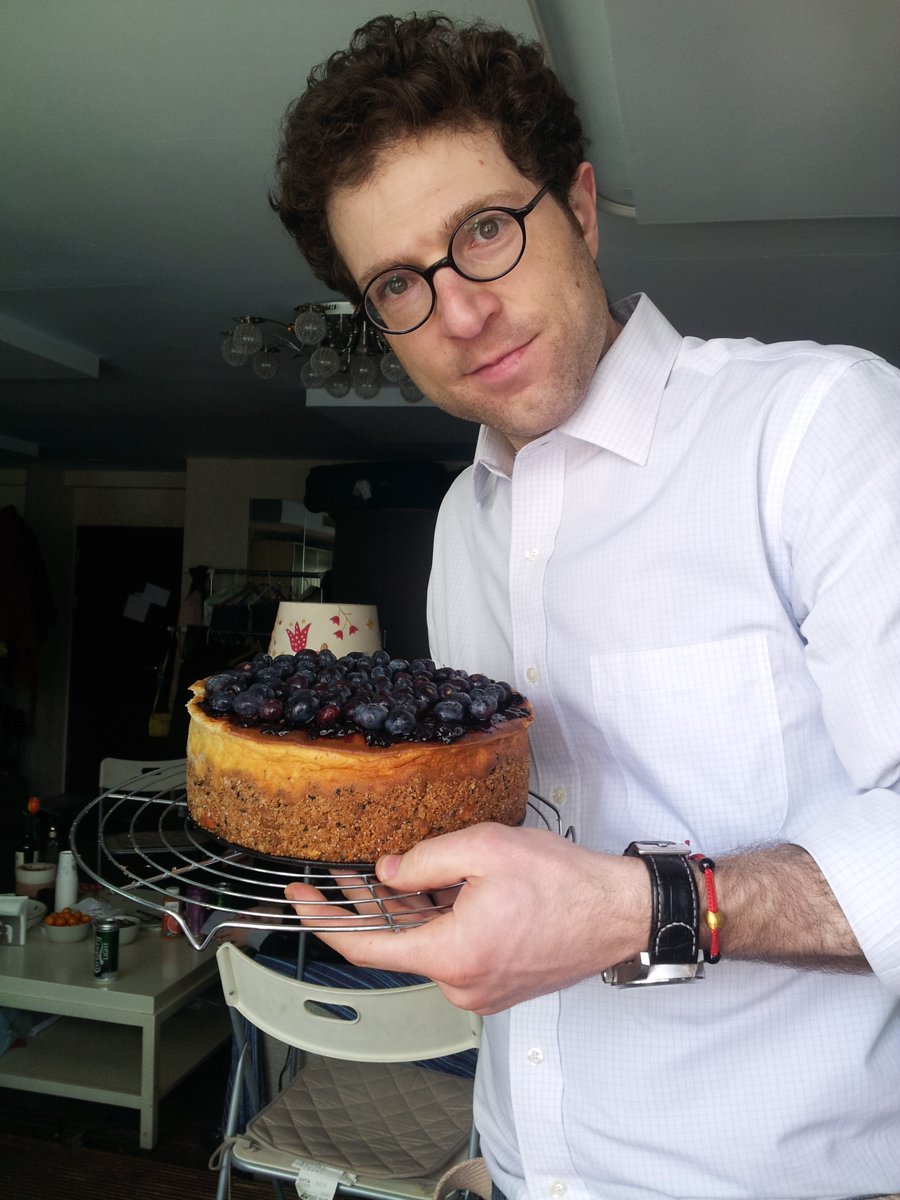
Skip ahead another fifteen years. I made my girlfriend a cake — my blueberry cheesecake — but this time I went the whole distance: no sugar at all, and none of the chemical impostors either. Nothing but the sweetness that lives naturally in the fruit itself, up in the crown.
Now, my girlfriend is a bubbly, sunny sort, and she'll tell you she loves cheesecake. But the cheesecakes she loves are the light, aggressively (almost saccharine) sweet ones — the lowly restaurant slab that, so long as it's presented prettily on the plate, she'll adore. (You might reasonably ask how the two of us manage to date at all. Ah, mon cher — love is a complicated business.) She took a bite, closed her eyes, and for a moment she looked as though she might let out some rapturous cry of ecstasy over my little work of art. She opened her eyes slowly, looked straight at me — as if staring directly into my soul (yes, a great turn-on) — and, with great deliberation and a deadly serious expression, intoned:
"This is the absolute worst cheesecake I have ever tasted. Like… literally… the worst."
The verdict that told me I was onto somethingSure, I love and respect my girlfriend — and her rather mainstream, sugar-spun tastes, and all the rest (no judgment, after all). But, sitting there across from her in the pregnant silence, I couldn't suppress the thought: I think I'm really onto something here. (For what it's worth, she admitted she really liked the crown.)
Not long after, I baked a no-sugar blueberry cake for a friend's daughter's Bat Mitzvah, and there I watched the whole story play out in miniature. There were those who were entranced by the idea of this strange, unsweet, mysterious cake and couldn't get enough of it — and those who simply needed it sweeter, and said so. Both, I've come to think, are exactly right. This isn't a cake for everyone. It was never trying to be.
V · The flavor
What it tastes like (and why that's hard to say).
It's genuinely difficult for me to describe the flavor. I'm a musician turned entertainment lawyer, not a lifelong baker — not by any stretch. But I have spent a great many evenings refining the spices, the cheeses, the balances that go into this cake, and I've learned that the honest answer to "what does it taste like" isn't really a list of ingredients at all.
So here is the truest answer I can give. For the artistic, free-spirited sort, the best sense of the flavor might come from knowing what I was listening to while I baked and pondered and tasted and started over: the atmospheric, existential, deeply sardonic and sometimes hysterical works of Camus and Kafka and Joan Didion, read aloud; and Brahms' German Requiem; Bruckner's Symphony No. 5 (yes, the Fifth) and his Mass in E minor — and not, to be sure, those brisk French or American readings, but the slower, weightier readings that let the thing breathe — and, somehow, at the same time, more intense.
That is the register the cake is reaching for. Something a little melancholy and a little transcendent. Something complex, and unafraid of a little shadow. Something that lingers.
And lingering, I've come to think, is the whole point. What matters about a dessert isn't only the pleasure of the bite; it's what you're left with once it's gone. It's a little like the difference between love and everything that merely resembles it — when it's real, the afterglow stays with you for hours, days, weeks; when it isn't, you feel faintly sick and start looking for the exit. Most desserts are the second (or worse) kind. I set out to make the first.
"When it's real, the afterglow stays with you for hours, days, weeks."
And there is coffee — or at least the spirit of it. Some of the happiest memories of my childhood are of Thanksgivings and Christmases at my Italian grandparents' table: after the antipasto, the seafood, and the endless pastas, out came the moka pot hissing on the stove and a plate of fresh biscotti. Espresso and biscotti with my grandparents — only ever at their place, for whatever reason — was about as close to heaven as a child could get. That ritual is the soul of this cake. And when we have our pop-ups (or store), the moka pot will surely be an intimate partner. And yes, there's a trace of caffeine in it too (but no — not from the coffee), the same bittersweet backbone a good espresso lends an afternoon: the note most people can't name but always notice.
For the sticklers
What I'll admit to.
The full recipe stays behind the counter. But for the curious, here's what's in the pan:
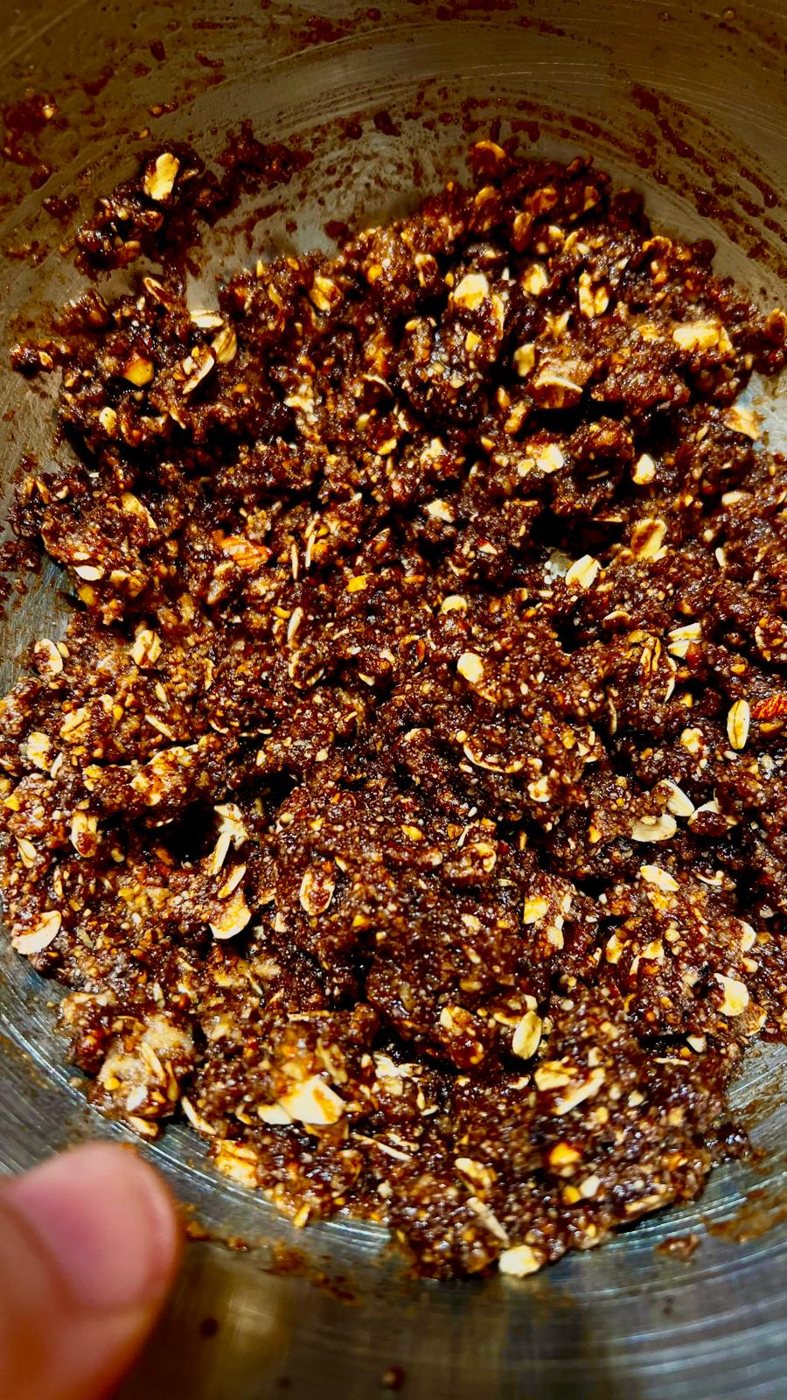
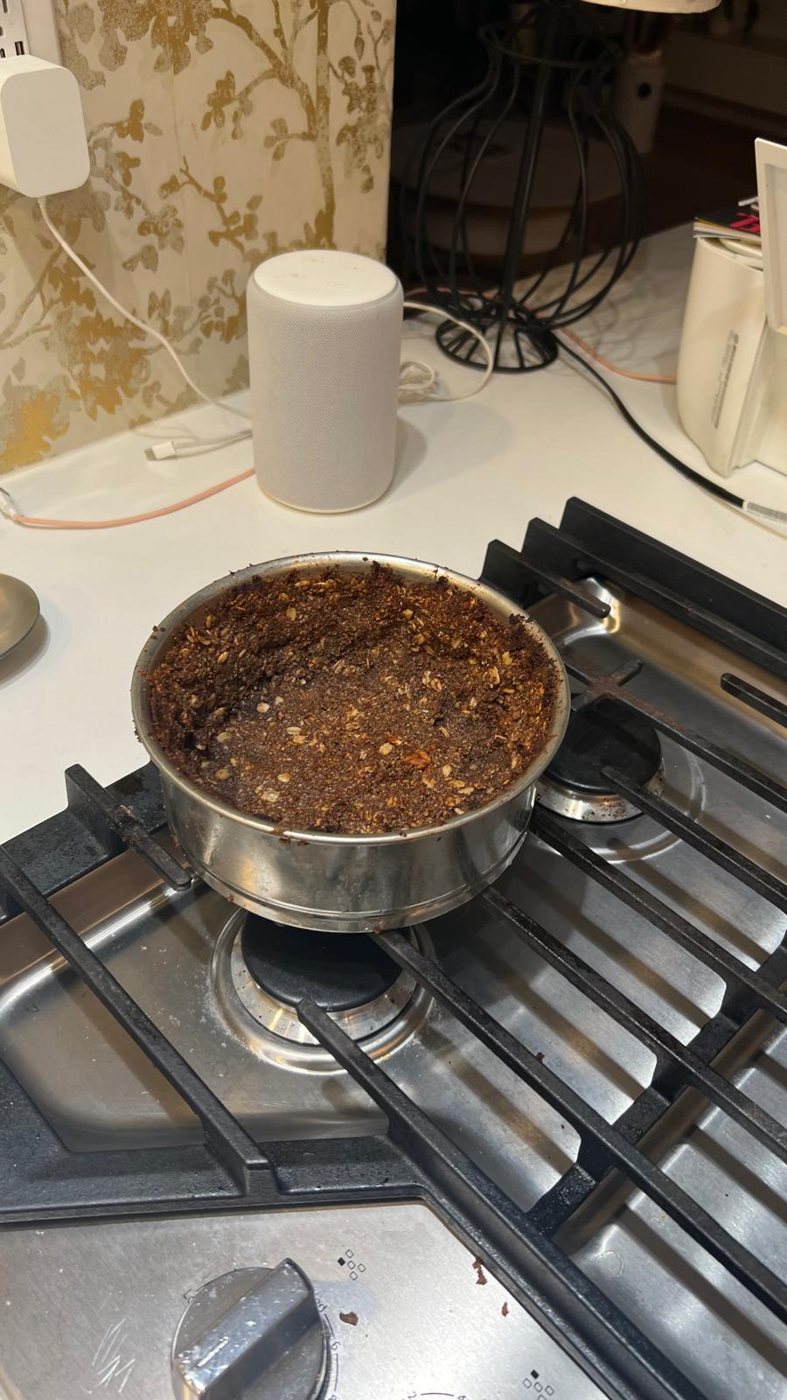
- A generous portion of nuts in the crust — never crushed cookies.
- A trace of caffeine — no, not from the coffee.
- A unique European cheese at the heart of it.
- A hint of Middle Eastern flavor and spice.
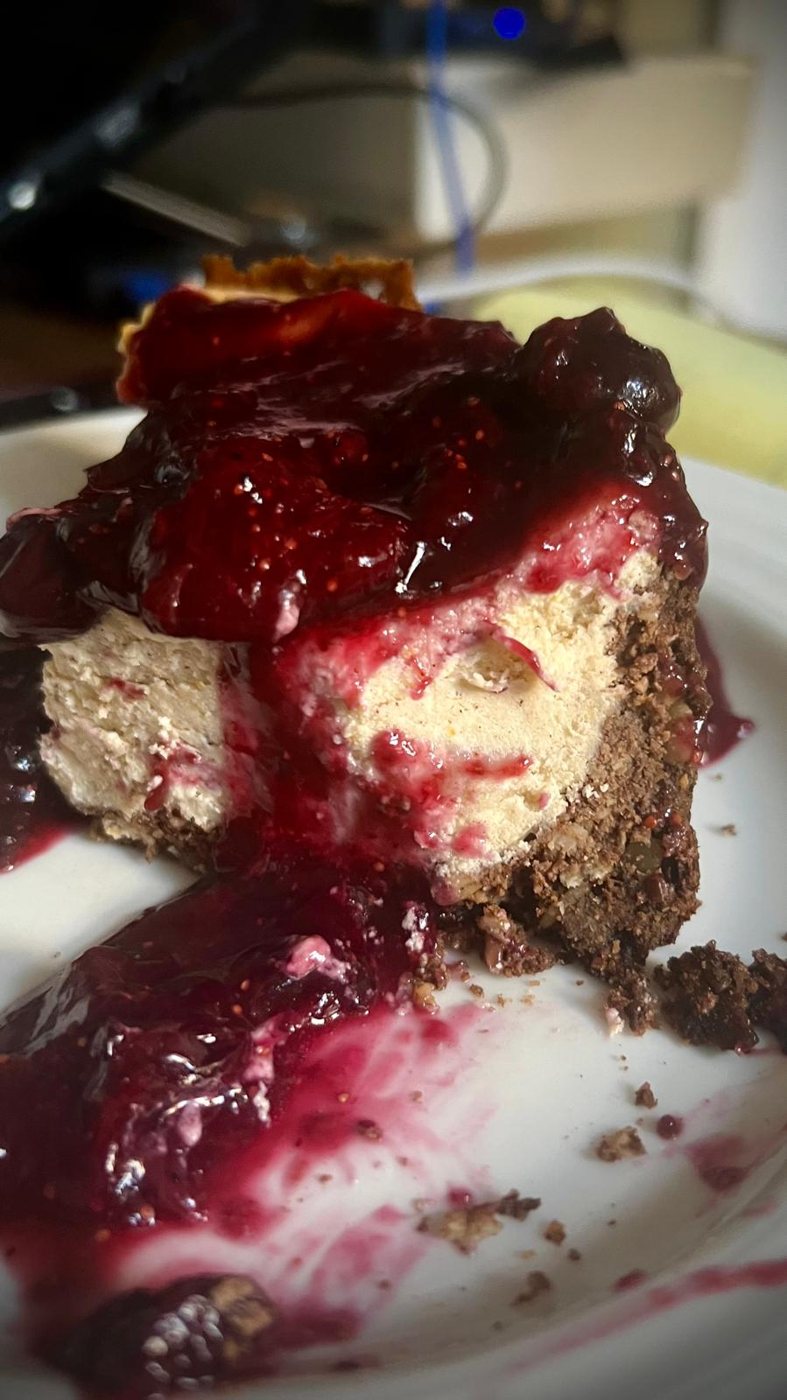
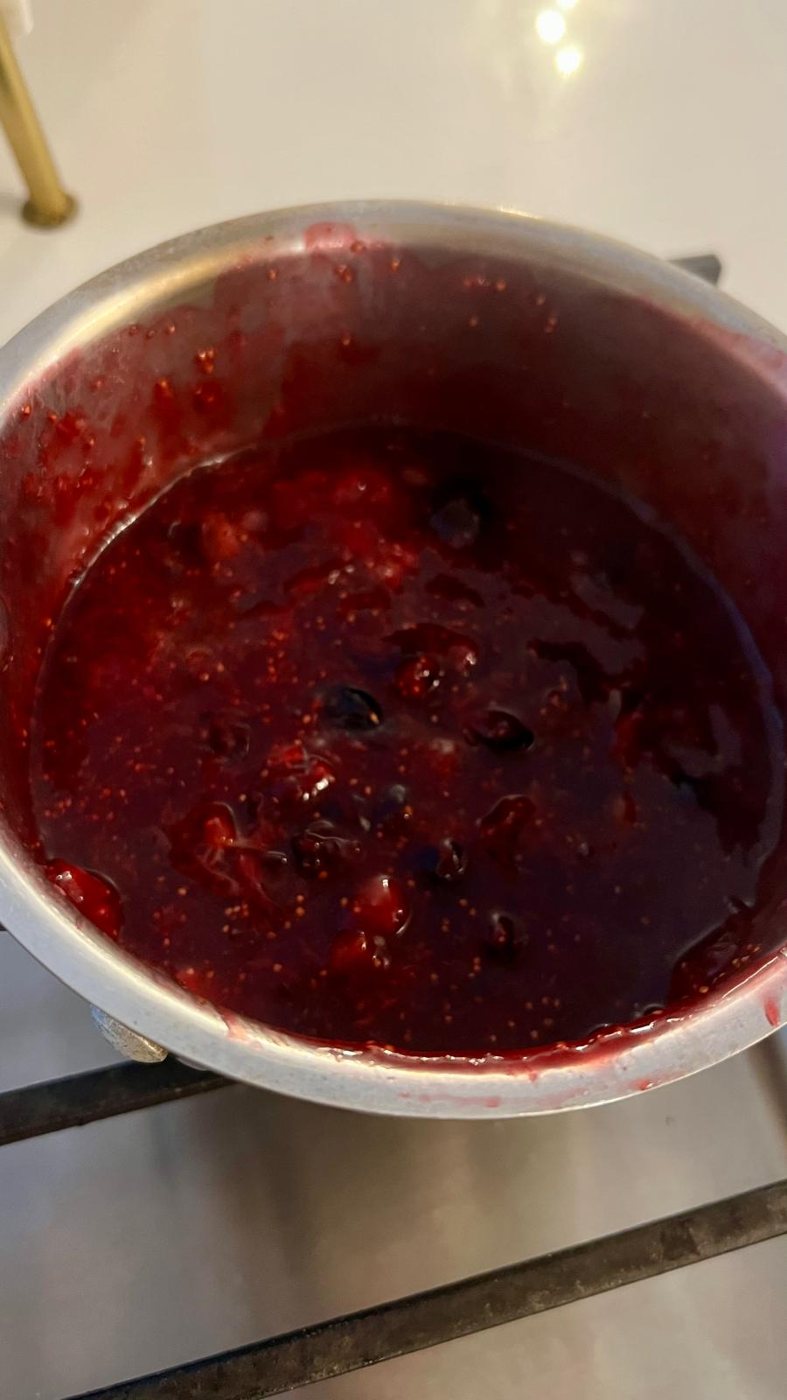
- A crown of organic blueberries and fresh figs — the only sweetness there is.
VI · Through the pan
Why bother making it at all.
I don't know what the meaning of life is. If you do, kudos. I've made a kind of peace with the likelihood that I never will. But somewhere along the way I realized that reaching someone — moving them, even for a moment, in a way that feels profound, or true, or just quietly beautiful — is not only a worthy way to spend a life. For me it's a passion. And I've found, to my own surprise, that the passion sometimes comes through the pan. It's not so different, I've come to think, from music, or painting, dance or design — the same impulse, only routed through rich French butter and heat instead of sound or paint. Life is here and now; and maybe there's nothing better you can do with it than make people a little happier — not the cheap, sugar-rush kind of happy, but the kind that's good for them, and stays a while.
That's what this cake is. I refuse to call it a "health food" — even if the protein-rich cheese, the farm-fresh eggs, the roasted nuts, and the antioxidant-rich berries make it exactly that. To call it healthy feels too clinical for something born of pure romance. It isn't a gimmick; it's a love letter to the fruit that once tried to kill me. It is a dessert stripped of its chemical impostors and sugar-crutch, relying entirely on the dark, natural jam of figs and blueberries to sing. It is made to move you. It is made to be real. And, like all real love, it is made to linger in the memory long after the plate is clean.
I'd love to know what you think.